Power Converter: Convert Watts, Kilowatts, HP & More Online
Convert Watts, Kilowatts, Horsepower and More
Power is one of the most common measurements in electrical engineering, electronics, mechanical systems, appliances, and energy-related calculations. Yet power values are often presented in different units, which can make comparisons unnecessarily difficult.
A motor specification might use horsepower. An electrical device may list watts. A larger industrial system may use kilowatts or megawatts.
A Power Converter makes these values easier to compare by converting a measurement from one power unit into another.
For example, you might need to convert watts to kilowatts, kilowatts to watts, or horsepower to watts. Instead of calculating each conversion manually, an online power conversion tool can perform the calculation quickly.
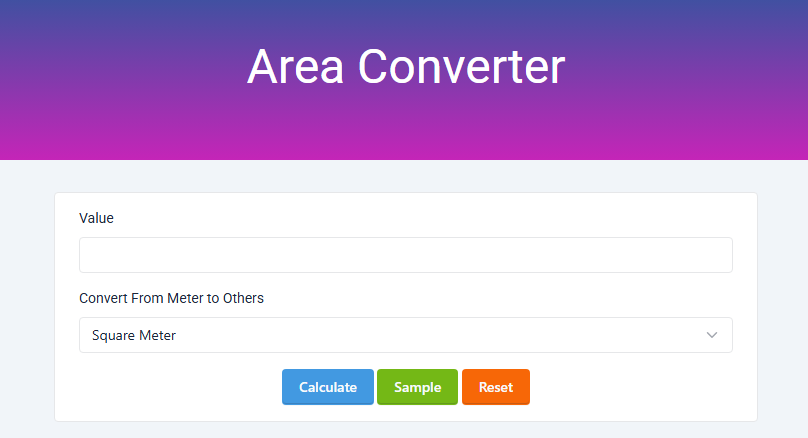
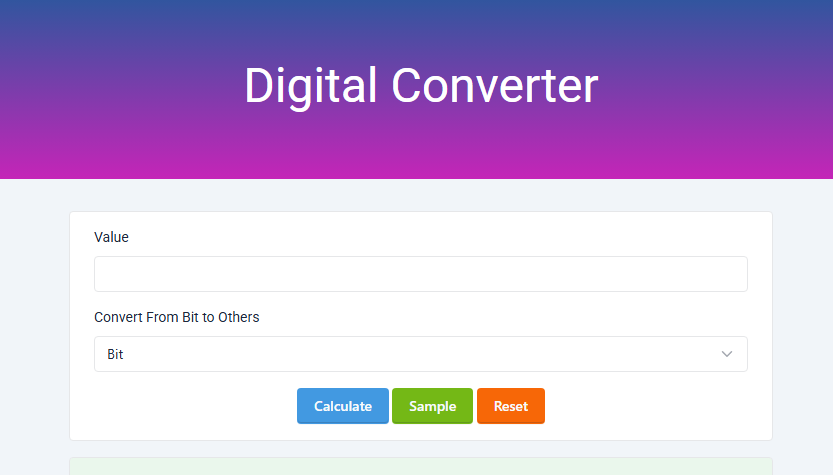
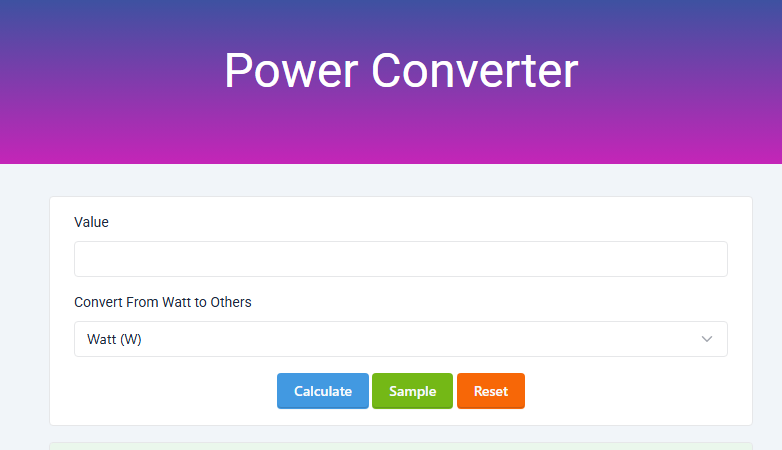
OKemall's Power Converter provides a simple browser-based interface where you can enter a value, select a conversion direction, calculate the result, and reset the tool when needed. The current tool starts with Watt as the input unit and provides a selection for converting it to other units.
This guide explains how power conversion works, which units matter, how the formulas are derived, where the conversions are useful, and what to check when interpreting the result.
What Is a Power Converter?
A Power Converter is a calculation tool that changes a power measurement from one unit into another equivalent unit.
The physical quantity remains the same.
Only its numerical representation changes.
For example:
1 kilowatt = 1,000 watts
Therefore:
2 kW = 2,000 W
And:
5,000 W = 5 kW
The purpose of a converter is to handle these relationships quickly and consistently.
Power converters are useful when technical specifications, engineering calculations, product documentation, or educational material use different measurement systems.
Real-World Takeaway: A power converter doesn't change the actual power. It changes how that power is expressed so two measurements using different units can be compared correctly.
What Is Power?
In physics, power describes the rate at which energy is transferred or work is performed.
The SI unit of power is the watt (W).
One watt is equal to one joule of energy transferred per second:
1 W = 1 J/s
This definition is useful because it explains why power is different from energy.
Energy tells you how much work or energy is involved.
Power tells you how quickly that energy is transferred or used.
For example, a device rated at 100 watts uses or transfers energy at a rate of 100 joules per second under the relevant operating conditions.
Common Power Units
Several units are commonly used to express power.
| Unit | Symbol | Common Use |
|---|---|---|
| Watt | W | Electrical devices and general measurements |
| Kilowatt | kW | Appliances, motors, machinery |
| Megawatt | MW | Large industrial systems and power generation |
| Gigawatt | GW | Large-scale electricity generation |
| Milliwatt | mW | Small electronic devices and signals |
| Microwatt | µW | Very low-power electronics |
| Horsepower | hp | Engines and motors |
| Metric horsepower | PS | Automotive and mechanical specifications |
The correct unit depends on the application.
A phone charger might be described in watts.
An industrial motor may be rated in kilowatts.
A car engine is commonly described using horsepower.
A large power plant may be rated in megawatts or gigawatts.
Watts to Kilowatts
One of the most common power conversions is watts to kilowatts.
The relationship is:
1 kW = 1,000 W
Therefore:
kW = W ÷ 1,000
Examples:
| Watts | Kilowatts |
|---|---|
| 100 W | 0.1 kW |
| 500 W | 0.5 kW |
| 1,000 W | 1 kW |
| 2,500 W | 2.5 kW |
| 5,000 W | 5 kW |
| 10,000 W | 10 kW |
This conversion is particularly useful for electrical appliances, motors, generators, and equipment specifications.
Kilowatts to Watts
The reverse conversion is equally simple.
W = kW × 1,000
For example:
3 kW × 1,000 = 3,000 W
So a 3 kW appliance or machine has a rated power of 3,000 watts.
Another example:
7.5 kW × 1,000 = 7,500 W
A converter is useful when you encounter a specification in one unit but need the value in another.
Watts to Megawatts
Large electrical systems often use megawatts instead of watts.
The relationship is:
1 MW = 1,000,000 W
Therefore:
MW = W ÷ 1,000,000
For example:
2,000,000 W = 2 MW
And:
7,500,000 W = 7.5 MW
Using megawatts keeps large numbers easier to read.
Imagine describing a large power-generation system as 250,000,000 watts. Writing it as 250 MW is considerably more practical.
Megawatts to Watts
To convert megawatts back into watts:
W = MW × 1,000,000
For example:
4 MW = 4,000,000 W
This conversion can be useful when comparing large systems with specifications expressed in watts.
Watts to Milliwatts
Small electronic devices and signals may use milliwatts.
The relationship is:
1 W = 1,000 mW
Therefore:
mW = W × 1,000
Examples:
-
0.1 W = 100 mW
-
0.5 W = 500 mW
-
1 W = 1,000 mW
-
2 W = 2,000 mW
The conversion is especially useful when dealing with low-power electronics and technical specifications.
Milliwatts to Watts
The reverse calculation is:
W = mW ÷ 1,000
For example:
250 mW = 0.25 W
And:
750 mW = 0.75 W
When values are very small, keeping the units consistent prevents mistakes caused by misplaced decimal points.
What Is Horsepower?
Horsepower is another widely recognized unit of power.
It is commonly associated with engines and mechanical systems.
You may see horsepower used for:
-
Cars
-
Motorcycles
-
Engines
-
Pumps
-
Industrial motors
-
Mechanical equipment
The exact relationship between horsepower and watts depends on the definition being used.
For mechanical horsepower:
1 hp ≈ 745.7 W
Therefore:
1 hp ≈ 0.7457 kW
For example:
10 hp ≈ 7.457 kW
This is an approximate conversion because horsepower is not an SI unit and different horsepower definitions exist.
Horsepower vs Metric Horsepower
Not every reference to horsepower means exactly the same thing.
Mechanical horsepower and metric horsepower have slightly different values.
Mechanical horsepower is approximately:
745.7 W
Metric horsepower, often represented as PS or CV in some contexts, is approximately:
735.5 W
That difference matters when working with technical specifications.
If a product specification is being compared across countries or industries, identify which horsepower definition is being used before making a direct comparison.
Real-World Takeaway: Never assume every “horsepower” figure uses the same definition. Mechanical horsepower and metric horsepower are close, but they are not identical.
Power Conversion Reference Table
The following relationships are useful for common calculations:
| Conversion | Approximate Relationship |
|---|---|
| 1 W | 1 W |
| 1 kW | 1,000 W |
| 1 MW | 1,000,000 W |
| 1 GW | 1,000,000,000 W |
| 1 W | 1,000 mW |
| 1 mechanical hp | 745.7 W |
| 1 mechanical hp | 0.7457 kW |
| 1 metric hp | 735.5 W |
| 1 metric hp | 0.7355 kW |
These values are useful for understanding the scale of different power units.
How to Use a Power Converter
Using an online Power Converter generally takes only a few steps.
1. Enter the power value
Enter the number you want to convert.
For example:
1500
2. Select the input unit
Choose the unit associated with the number.
If your value is 1,500 watts, select Watt.
The OKemall tool currently displays Watt as its initial input selection.
3. Select the target unit
Choose the unit you want to convert the value into.
For example:
Watt → Kilowatt
4. Calculate
Use the Calculate function to generate the converted value. The current OKemall interface includes Calculate, Sample, and Reset controls.
5. Review the result
Check that the input unit and output unit are correct before using the result in another calculation.
This is particularly important when working with very large or very small values.
Example: Convert 2,500 Watts to Kilowatts
Suppose a device has a rated power of:
2,500 W
The conversion formula is:
kW = W ÷ 1,000
Therefore:
2,500 ÷ 1,000 = 2.5 kW
So:
2,500 W = 2.5 kW
The physical power has not changed.
Only the unit has changed.
Example: Convert 7.5 kW to Watts
Start with:
7.5 kW
Use:
W = kW × 1,000
Therefore:
7.5 × 1,000 = 7,500 W
So:
7.5 kW = 7,500 W
This type of conversion is common when comparing equipment with specifications listed in different units.
Example: Convert 5 Horsepower to Watts
Using mechanical horsepower:
1 hp ≈ 745.7 W
Therefore:
5 × 745.7 = 3,728.5 W
So:
5 hp ≈ 3,728.5 W
Or approximately:
3.73 kW
The result is approximate because horsepower and watt relationships depend on the definition used.
Power vs Energy: Don't Confuse the Two
Power and energy are closely related but represent different physical quantities.
Power measures the rate of energy transfer.
Energy measures the amount of energy.
Power is commonly measured in:
-
Watts
-
Kilowatts
-
Megawatts
-
Horsepower
Energy is commonly measured in:
-
Joules
-
Watt-hours
-
Kilowatt-hours
-
Megawatt-hours
For example, a device can have a power rating of 1,000 W and consume 1 kWh of energy if it operates at that power continuously for one hour under the relevant assumptions.
The distinction matters when discussing electricity usage and costs.
Power and Electricity Consumption
People often confuse a device's power rating with the amount of electricity it consumes.
A device rated at:
1,000 W
has a power rating of 1 kW.
If it operates continuously for two hours at that rated power, its energy use would be:
1 kW × 2 hours = 2 kWh
The first measurement is power.
The second is energy.
A Power Converter handles the first category. An energy calculator or electricity-use calculation is needed for the second.
Power Conversion in Electrical Engineering
Electrical engineers regularly work with power values expressed in different units.
For a simple DC circuit:
P = V × I
Where:
-
P = power in watts
-
V = voltage in volts
-
I = current in amperes
For example, a device operating at 12 volts and drawing 5 amperes has:
P = 12 × 5
P = 60 W
Power conversion can then be used if the result needs to be expressed in another unit.
For AC systems, power calculations can be more complex because factors such as power factor and phase relationships may need to be considered.
A unit converter should not be confused with a complete electrical engineering calculator.
Real Power, Reactive Power, and Apparent Power
Electrical power systems use several related concepts.
Real Power
Real power is the power actually consumed or converted into useful work or heat.
It is commonly measured in:
watts (W)
Reactive Power
Reactive power is associated with energy storage and return in AC inductive or capacitive systems.
It is commonly measured in:
volt-amperes reactive (var)
Apparent Power
Apparent power combines real and reactive components and is commonly expressed in:
volt-amperes (VA)
These concepts are related but are not interchangeable.
OKemall also lists separate Reactive Power Converter and Apparent Power Converter tools alongside the Power Converter in its converter collection.
Real-World Takeaway: If you're working with an AC electrical system, converting watts alone may not tell the whole story. Real, reactive, and apparent power describe different aspects of the system.
Power Converter vs Energy Converter
The difference is simple but significant.
| Measurement | Typical Units | What It Describes |
|---|---|---|
| Power | W, kW, MW, hp | Rate of energy transfer |
| Energy | J, Wh, kWh, MWh | Amount of energy |
A Power Converter changes the unit used to express power.
An Energy Converter changes the unit used to express energy.
Do not substitute one for the other.
Where Power Conversion Is Used
Power conversion has practical applications across many fields.
Electrical Engineering
Engineers may need to compare power ratings across equipment specifications.
Electronics
Electronic components and devices can use very small power units such as milliwatts or microwatts.
Mechanical Engineering
Engineers commonly encounter horsepower and kilowatts when working with engines and motors.
Automotive
Vehicle engine output is often expressed in horsepower or kilowatts.
Renewable Energy
Solar installations and other generation systems may be rated in watts or kilowatts for smaller installations and megawatts for larger systems.
Industrial Equipment
Factories and industrial facilities frequently work with motor ratings measured in kilowatts.
Consumer Electronics
Chargers, power adapters, computers, appliances, and other devices commonly display watt ratings.
Power Conversion for Solar Systems
Solar equipment provides a good example of why consistent units matter.
A small solar panel might be rated at:
400 W
A larger solar installation may be described as:
5 kW
A commercial solar facility might be rated in:
MW
These are simply different scales of the same physical quantity.
For example:
5 kW = 5,000 W
If a specification sheet lists one component in watts and another in kilowatts, converting them to a common unit makes comparison easier.
Power Conversion for Appliances
Household appliances often display their power rating in watts.
Examples may include:
-
Light bulbs
-
Fans
-
Televisions
-
Computers
-
Microwaves
-
Heaters
-
Kitchen appliances
A device rated at:
1,500 W
can also be expressed as:
1.5 kW
The conversion does not mean the appliance suddenly uses more or less power. It is simply another way of writing the same rating.
Power Conversion for Motors
Motor specifications commonly use kilowatts or horsepower.
Suppose one motor is rated at:
3 kW
and another is listed as:
4 hp
To compare them, convert both to the same unit.
Using mechanical horsepower:
4 hp ≈ 2.983 kW
Therefore, the 3 kW motor and 4 hp motor have similar but not identical nominal power ratings.
The actual suitability of a motor, however, depends on much more than power rating alone.
Speed, torque, efficiency, duty cycle, voltage, current, and operating conditions can all matter.
Common Power Conversion Mistakes
Using the wrong direction
Remember:
W → kW: divide by 1,000
kW → W: multiply by 1,000
Reversing these operations can produce a result that is off by a factor of 1,000.
Confusing power and energy
A watt is not the same thing as a watt-hour.
W measures power.
Wh measures energy.
Ignoring horsepower definitions
Mechanical and metric horsepower are not exactly equivalent.
Losing decimal places
Very small and very large values require careful handling of decimal points.
Comparing values in different units
A value of 500 W should not be directly compared with 1 kW without converting them to a common unit.
Assuming rated power equals actual consumption
A device's rated power does not necessarily mean it continuously operates at that exact level under every condition.
Why Use an Online Power Converter?
Manual calculations are fine for simple conversions.
But an online converter becomes useful when:
-
You need repeated conversions.
-
You are comparing technical specifications.
-
You work with multiple units.
-
You want to reduce arithmetic errors.
-
You are checking a calculation.
-
You need a quick result without opening specialized software.
The main benefit is convenience.
For a straightforward unit conversion, there is little reason to repeatedly calculate the same relationship by hand.
Power Converter for Students
Students studying physics, engineering, electronics, or mathematics often encounter several power units.
A converter can help them verify calculations involving:
-
Watts
-
Kilowatts
-
Megawatts
-
Horsepower
-
Milliwatts
It should be used as a checking tool rather than a substitute for understanding the underlying formula.
Knowing that:
1 kW = 1,000 W
is more valuable than simply knowing how to click a conversion button.
Once the relationship is understood, an online converter makes repeated calculations faster.
Power Converter for Engineers and Technical Professionals
Professionals often work with specifications from different manufacturers.
One datasheet might use watts.
Another might use kilowatts.
A third might use horsepower.
A converter can standardize those values before they are compared.
That can make technical documentation easier to interpret, particularly during equipment selection or preliminary analysis.
However, unit conversion alone does not determine whether equipment is suitable for an application.
Always review the complete technical specification.
Frequently Asked Questions
What is a Power Converter?
A Power Converter is a tool that converts a power measurement from one unit to another, such as watts to kilowatts or horsepower to watts.
What is the SI unit of power?
The SI unit of power is the watt (W).
How many watts are in one kilowatt?
One kilowatt equals 1,000 watts.
How do I convert watts to kilowatts?
Divide the watt value by 1,000.
For example:
2,000 W ÷ 1,000 = 2 kW
How do I convert kilowatts to watts?
Multiply the kilowatt value by 1,000.
For example:
4 kW × 1,000 = 4,000 W
How many watts are in one megawatt?
One megawatt equals 1,000,000 watts.
How many watts are in one horsepower?
One mechanical horsepower is approximately 745.7 watts.
The exact conversion depends on the horsepower definition being used.
Is horsepower the same as kilowatts?
No. They are different units used to measure power, but they can be converted.
One mechanical horsepower is approximately 0.7457 kW.
What is the difference between power and energy?
Power describes the rate of energy transfer, while energy describes the amount of energy.
Watts measure power.
Watt-hours and kilowatt-hours measure energy.
Can I use a Power Converter for electrical calculations?
Yes, for unit conversion. However, complex electrical calculations may require additional formulas involving voltage, current, resistance, power factor, and other variables.
Can a Power Converter calculate electricity costs?
No. A power conversion tool changes units. Electricity-cost calculations require information such as energy consumption, operating time, and the applicable electricity tariff.
Why are some power values given in horsepower?
Horsepower is traditionally used to describe mechanical output, particularly for engines and motors. Kilowatts are also widely used and are the SI-compatible unit for power.
What is reactive power?
Reactive power is associated with energy exchange between certain AC circuit elements and is commonly measured in volt-amperes reactive (var). It is different from real power measured in watts.
What is apparent power?
Apparent power represents the combined effect of real and reactive power in an AC electrical system and is commonly measured in volt-amperes (VA).
Power Conversion Quick Reference
| From | To | Operation |
|---|---|---|
| Watts | Kilowatts | ÷ 1,000 |
| Kilowatts | Watts | × 1,000 |
| Watts | Megawatts | ÷ 1,000,000 |
| Megawatts | Watts | × 1,000,000 |
| Watts | Milliwatts | × 1,000 |
| Milliwatts | Watts | ÷ 1,000 |
| Mechanical horsepower | Watts | × 745.7 |
| Watts | Mechanical horsepower | ÷ 745.7 |
| Mechanical horsepower | Kilowatts | × 0.7457 |
| Kilowatts | Mechanical horsepower | ÷ 0.7457 |
Final Thoughts
Power conversion is fundamentally about expressing the same physical quantity in a different unit.
That sounds simple. In practice, unit differences can create confusion when equipment specifications, engineering documents, educational problems, and product descriptions use different measurement systems.
A Power Converter provides a quick way to move between common units such as watts, kilowatts, megawatts, milliwatts, and horsepower.
For basic conversions, the mathematics is straightforward. The bigger challenge is choosing the correct unit, understanding what the number represents, and avoiding confusion between power and energy.
When accuracy matters, verify the input unit first, use the appropriate conversion relationship, and check the result's scale before using it in a technical or financial decision.
For everyday unit conversions, an online tool can handle the repetitive arithmetic while leaving you free to focus on what the measurement actually means.

Popular Tools
Recent Posts